

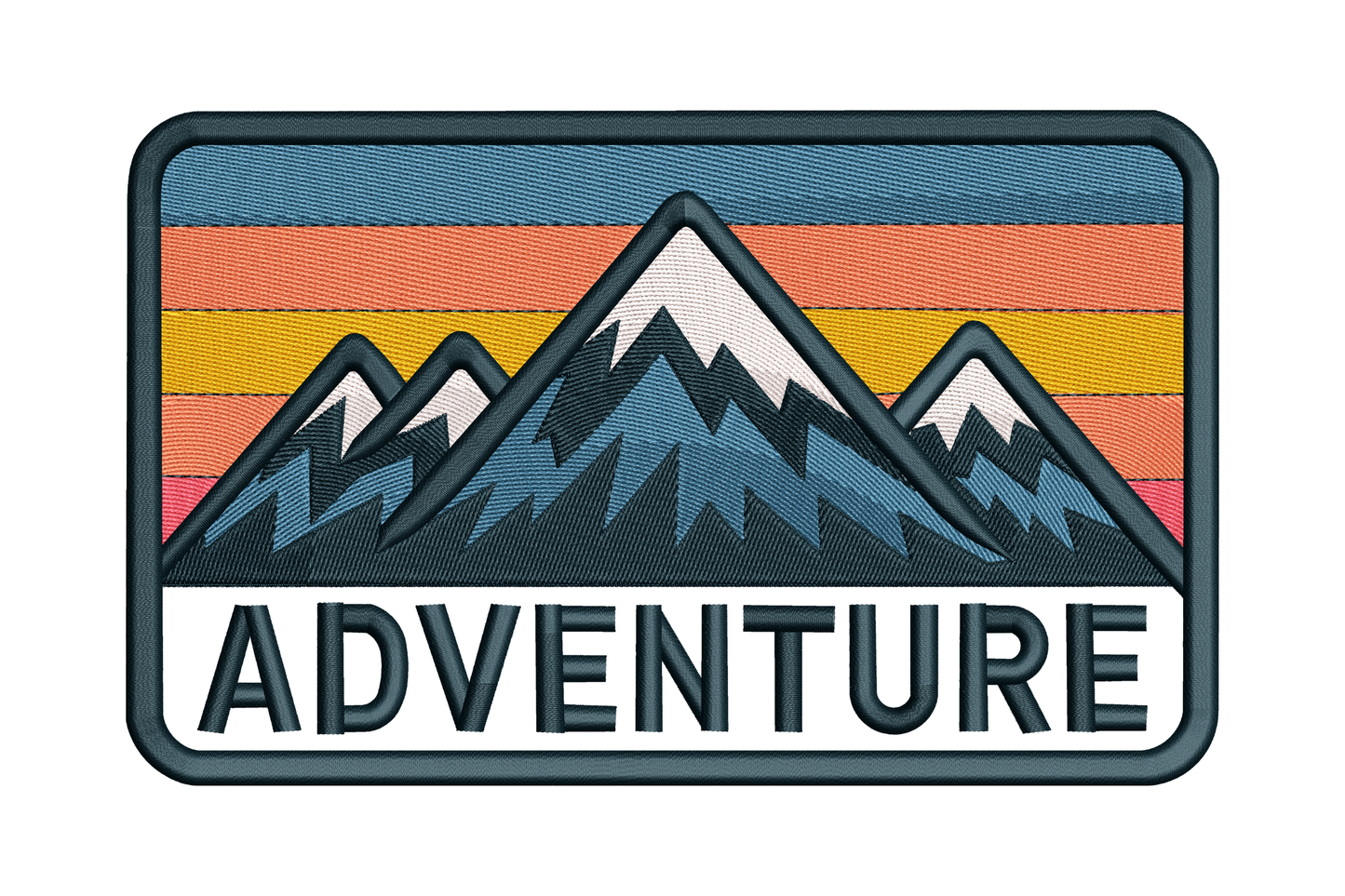
Its a rounded-rectangle patch shape with a thick dark teal border running all the way round, kind of like those classic iron-on badges you used to see on denim jackets in the 70s. Behind a cluster of jagged peaks theres a stack of horizontal satin stripes going slate blue at the top, then coral orange, golden yellow, and a thin pink strip near the base. The peaks themselves are filled in charcoal and dark teal tatami stitch with bright white snow caps stitched in directional satin. The whole thing reads very retro national-park, the kind of design thats instantly recognisable from three metres away.
At 40,561 stitches on the 7.5 inch, thats a genuinely dense build with alot going on in those background stripes and the pine-tree texture on the lower mountain slopes. A cutaway stabiliser is non-negotiable, especially on canvas or denim. For lighter fabrics like fleece or a cotton twill jacket, I'd go with a firm tearaway underneath and a layer of topping on top to keep those satin stripes crisp and flat. Hoop it tight. Any slack and the stripe alignment shifts.
Last week someone who makes custom hiking gear wholesale sent me a note saying they'd been sewing the 5 inch patch onto separate twill panels before heat-pressing them onto backpacks. That hadnt occured to me when I made this but it makes total sense. Stitch it onto a separate piece of canvas first, then attach. Saves re-hooping a stiff bag over and over.
The "ADVENTURE" text at the bottom sits in its own white banner section with bold block satin lettering in dark charcoal. Its raised and clean, no jump stitch gaps between letters. Center it carefully on whatever youre putting it on because the horizontal stripes will look off if the patch sits even slightly crooked. Use a placement stitch line as your guide before committing to the full run.
Pop the 4 inch onto a canvas tote and it looks like something you paid good money for at a national park gift shop. Pick a medium tearaway for bags if the canvas isnt too thick. Iron-on backing works too but I always tell people to add a few anchor stitches at the corners if it'll go in the wash regularly.
Message me a photo and I can lighten the underlay for knits.
What people are using this design for
A starting point. The design works for plenty more than just this list, this is what folks have stitched it onto most.
- Denim jacket back panelA 6 inch sits well across a canvas tote front, and denim jacket panels have room for the full 7.5 without crowding.
- Canvas backpack front pocketRuns clean across a zipped canvas pocket front when hooped flat on a cutaway base.
- Hiking gear patchNeeds a cutaway on stretchy tees but worth it for the crisp stripe definition you get.
- Cotton twill capThe 3.5 inch sits snug on a twill cap crown without distorting the brim seam.
- Canvas tote bagCanvas totes hold up to the density fine; tearaway underneath keeps the base stable.
- Fleece blanket cornerA fleece corner badge in the 4 inch looks like a proper outdoor brand label.
- Kids outdoor clothingKids adventure jackets in cotton twill are where this one really gets used alot.
Dimensions
5 sizes included. Stitch counts shown for the largest colorway.
| Size (in) | Stitches |
|---|---|
| 3.50 × 2.17 in | 13,328 |
| • 4.50 × 2.78 in | 18,937 |
| • 5.50 × 3.40 in | 25,337 |
| • 6.50 × 4.02 in | 32,471 |
| • 7.50 × 4.64 in | 40,561 |
Files & Formats
Eight machine formats included in one zip. Whichever your machine reads, its in the pack.


Plus a color chart for thread matching. See full format guide.
Reviews
No reviews yet for this design. Be the first to share your make once you have stitched it. Tag us on Instagram and we will feature your work.
You may also like
Other designs from this collection you might love

Blue Flower Fairy Embroidery Design, Instant Do...

Cute Baby Girl Clothes Embroidery Design, Machi...

Cherry Blossom Branch Embroidery Design, Spring...

Frog Love Embroidery Design, Cute Valentine Fro...

Cat on Moon Embroidery Design, Dreamy Night Sky...

Your Opinion Is Not Part of the Recipe Embroide...

Fustergluck Kitchen Rooster Embroidery Design, ...

Spring Floral Gnome Embroidery Design, Machine ...

Bee Farm Raw Honey Embroidery Design, Machine E...

Coastal Lighthouse Embroidery Design, Machine E...

Red Tulip Embroidery Design, Machine Embroidery...

Raven on Tree Embroidery Design, Machine Embroi...
Browse by category
Pick a theme, find the perfect design for your next project




About the artist
Reyazul Masud Riham, hand-drawing every design on this site
Every design on Re Embroidery is hand-digitized by one person. Each file gets sketched, color-matched, and stitch-tested on real fabric before it earns a place in the shop. No team. No auto-conversion from images. Just slow, deliberate work, sometimes three or four days per design.
That's the joy I work for.
The hard part is finding my designs re-uploaded and resold elsewhere. So when you buy from Re Embroidery, you're paying one real person for the file you're about to download. That matters.
